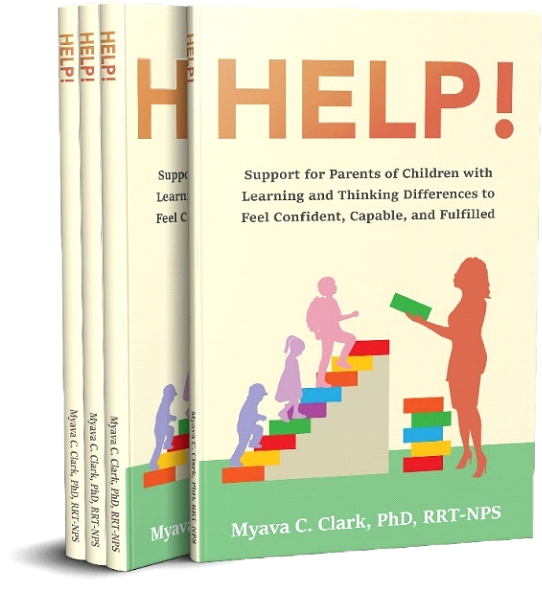
Start Here
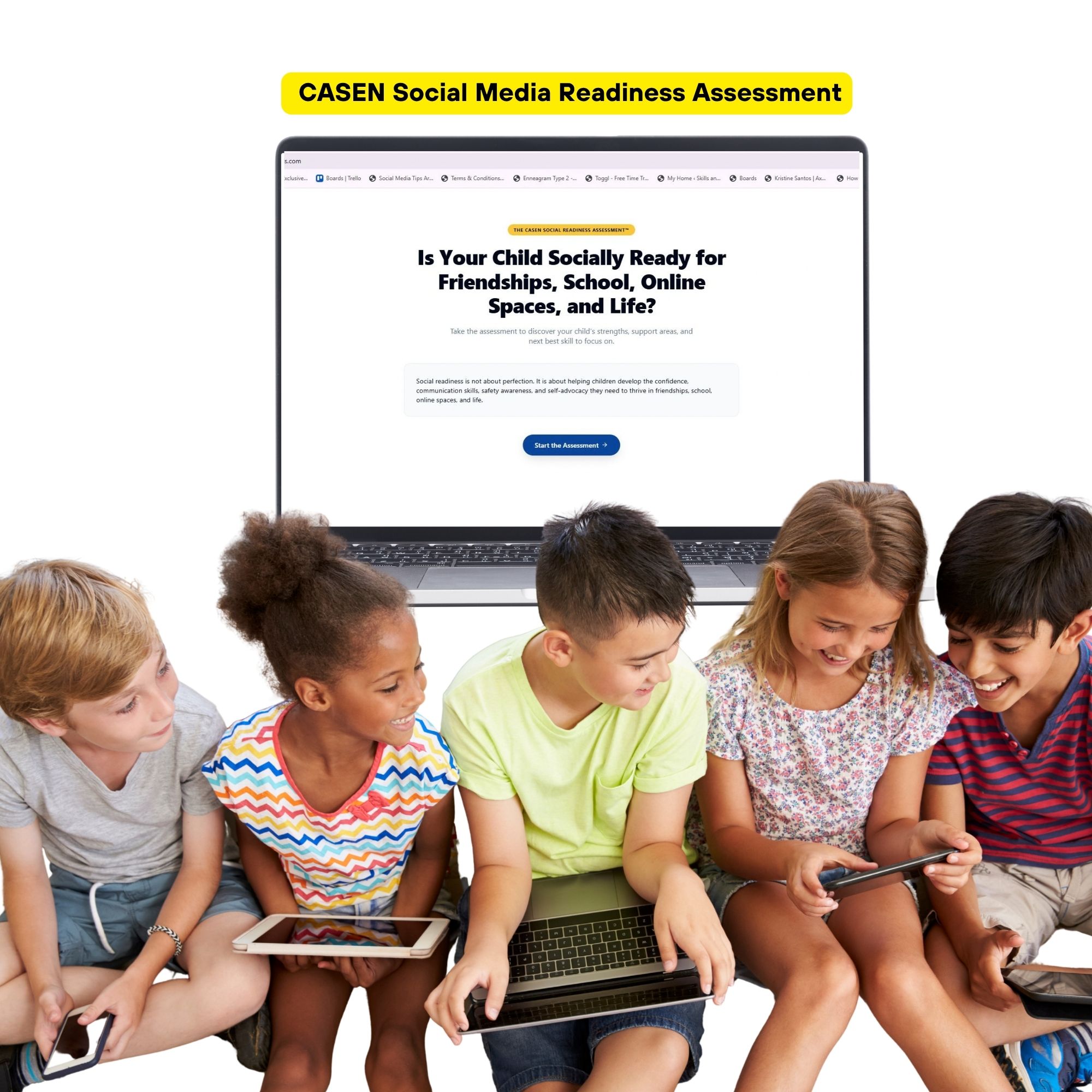
Social Media Readiness Assessment
Not sure where to start? Discover your child’s strengths and areas for growth with the free CASEN Social Media Readiness Assessment
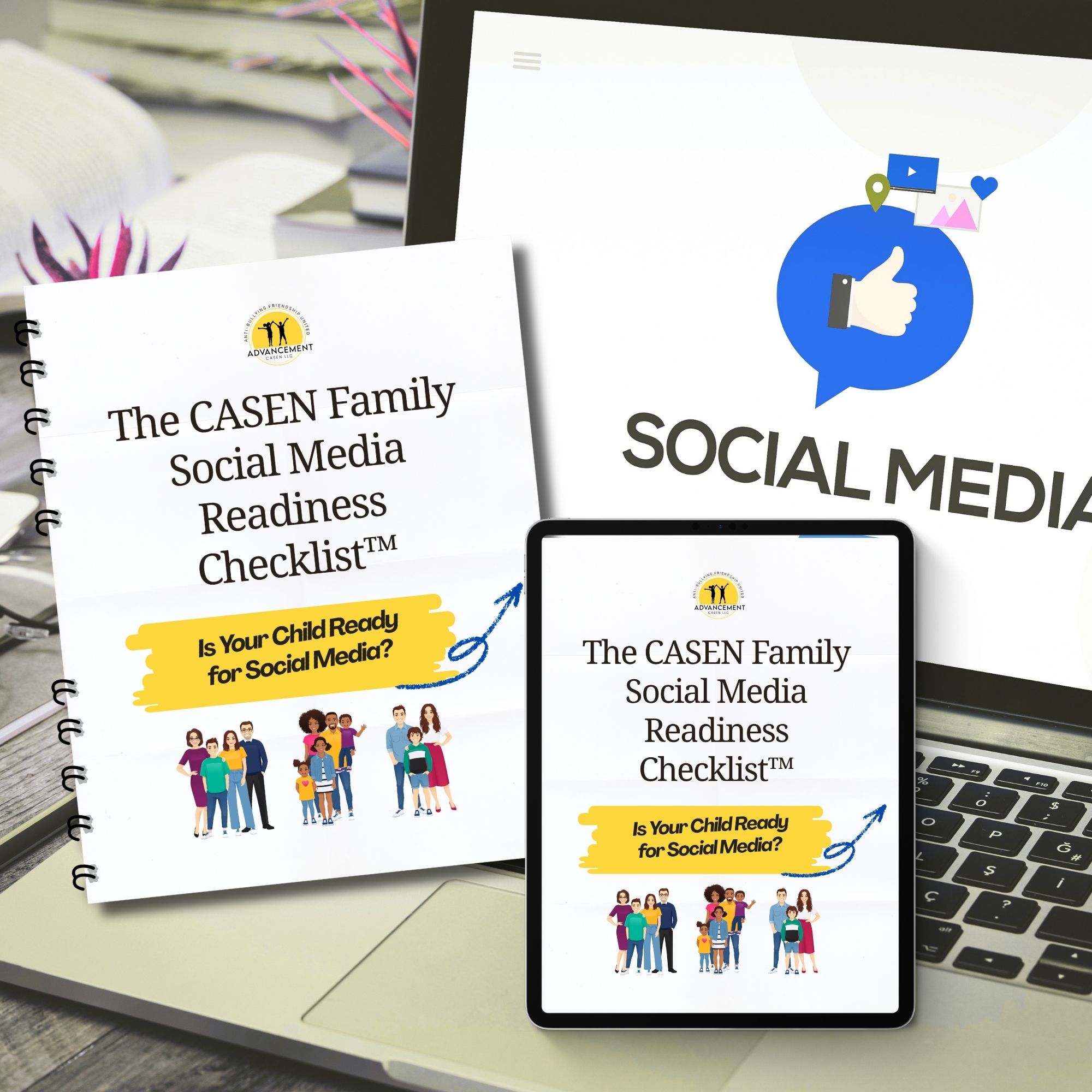
The CASEN Family Social Media Readiness Checklist™: Is Your Child Ready for Social Media?
The CASEN Family Social Media Readiness Checklist helps parents and caregivers of neurodivergent children ages 9–13 see how ready their child is for social media, using the four directions of the CASEN Compass™: Connection, Safety, Advocacy, and Navigation. In a few minutes, you check off the skills you’ve actually seen your child use, score each area, and get one simple step to practice together this week. It’s a conversation starter, not a test, and the free CASEN Social Media Readiness Assessment gives you the fuller picture.
Prepare

5 Ways Social-Emotional Skills Prepare Your Neurodivergent Child for the Digital World
Rules like ‘don’t share your password’ are easy to teach. They are harder to follow when a friend is the one asking. This guide opens with a short story about a 12-year-old in a group chat, then shows five social-emotional skills that prepare neurodivergent children for moments like it, with a question to ask your child for each.
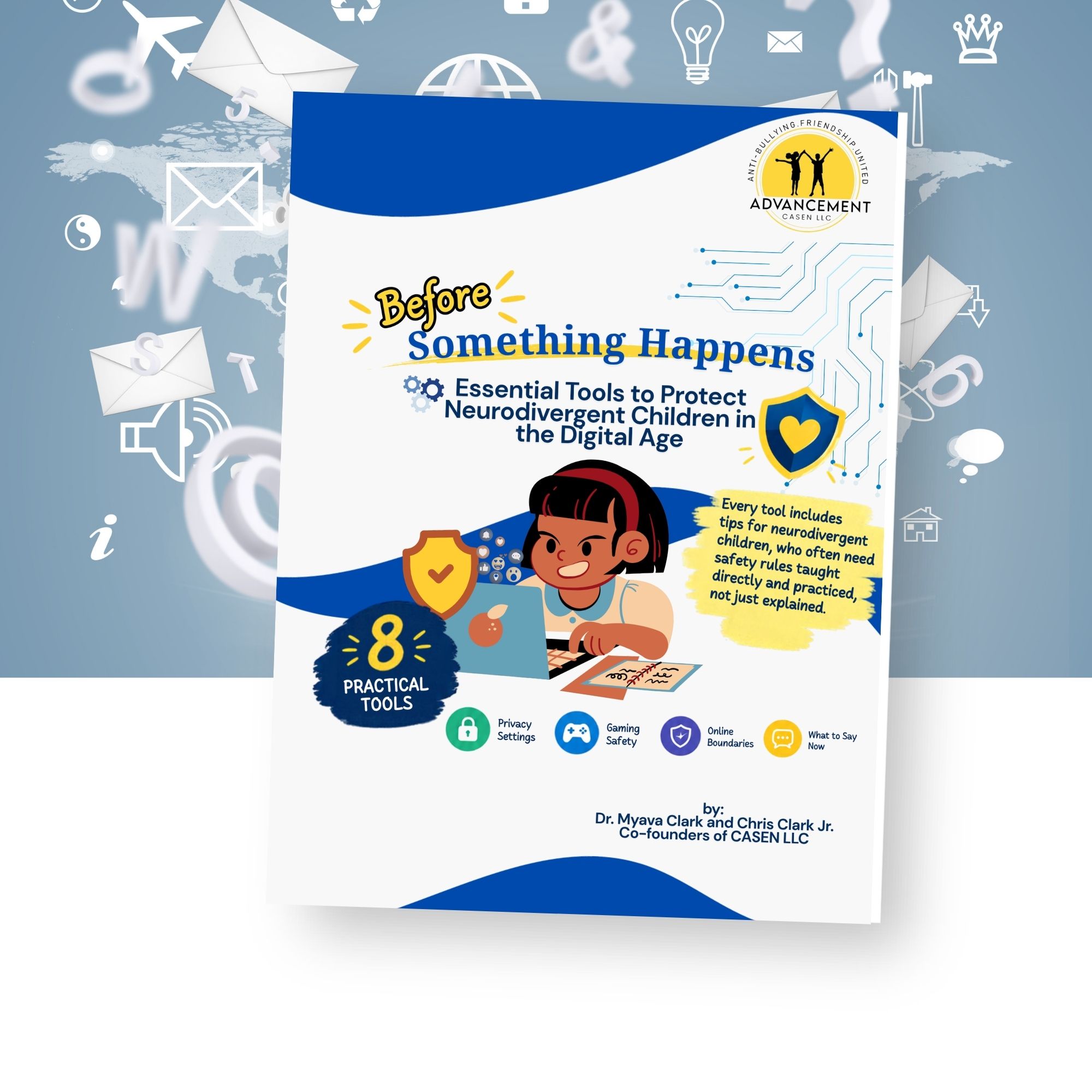
Before Something Happens: Essential Tools to Protect Neurodivergent Children in the Digital Age
Your child doesn’t have to be on social media to be part of the digital world. This guide gives parents eight practical tools to set up before anything goes wrong, from privacy settings and gaming safety to what to say now so your child comes to you if someone ever threatens them online. Every tool includes tips for neurodivergent children, who often need safety rules taught directly and practiced, not just explained.
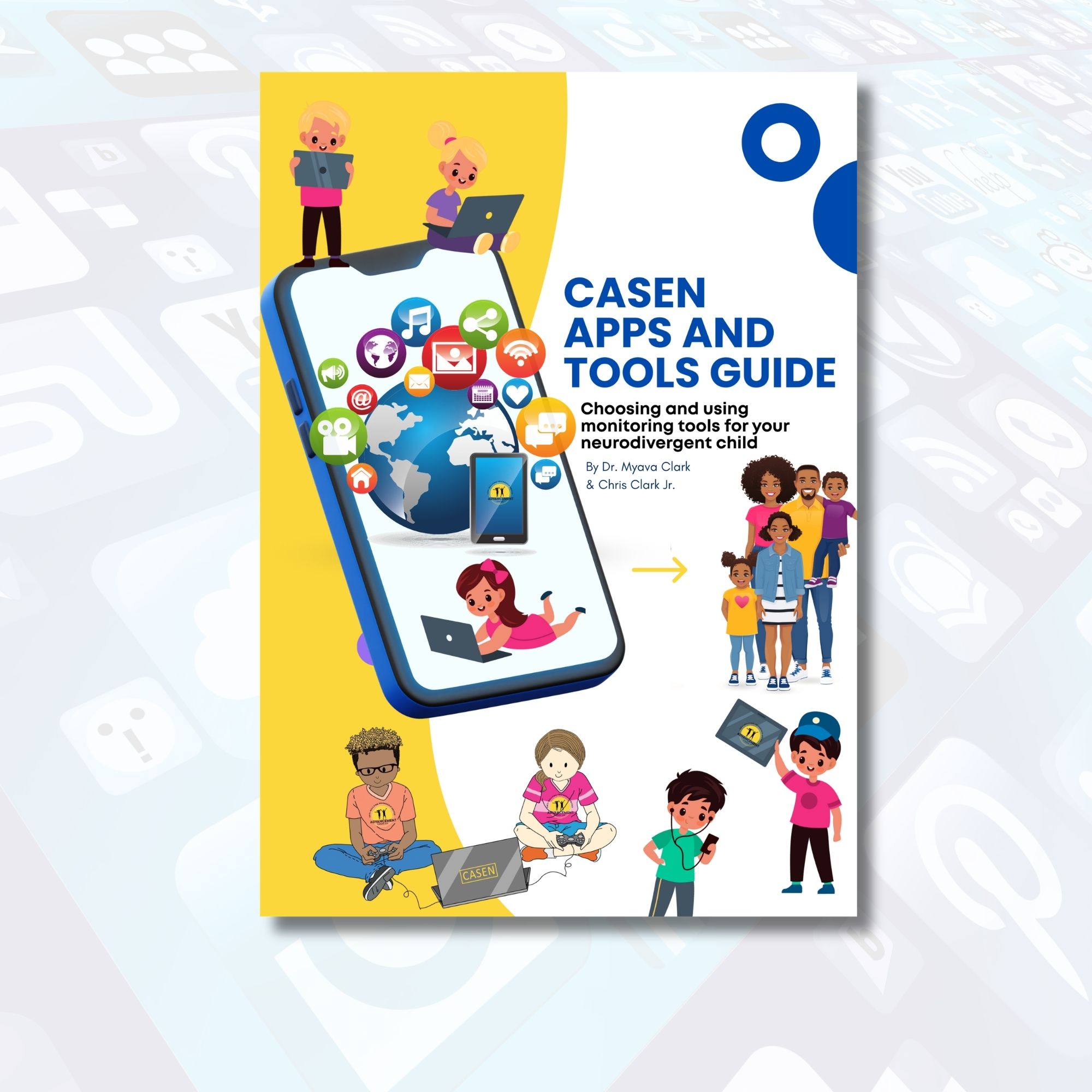
The CASEN Apps and Tools Guide
Is a monitoring app worth it, and which one fits your child? This guide helps you decide what your family needs, start with the free controls you already own, and compare Bark, Qustodio, Net Nanny, and others by what each does best. It shows you how to tell your child about monitoring so it feels like support, not spying, and how to step back as their skills grow. It includes a family monitoring agreement you fill in and sign together.

Speak Up, I’ve Got You: The CASEN Family Speak-Up Plan
Most children who are hurt, pressured, or scared online never tell an adult. This fill-in plan, completed together as a family, gives your child three trusted adults, ready-made words for saying no and asking for help, a family code word, and practice cards. It also includes a signed parent promise not to take away devices as punishment for telling, which removes the fear that keeps many children quiet. It’s the free guide for the Advocacy direction of the CASEN Compass™.
Recognize
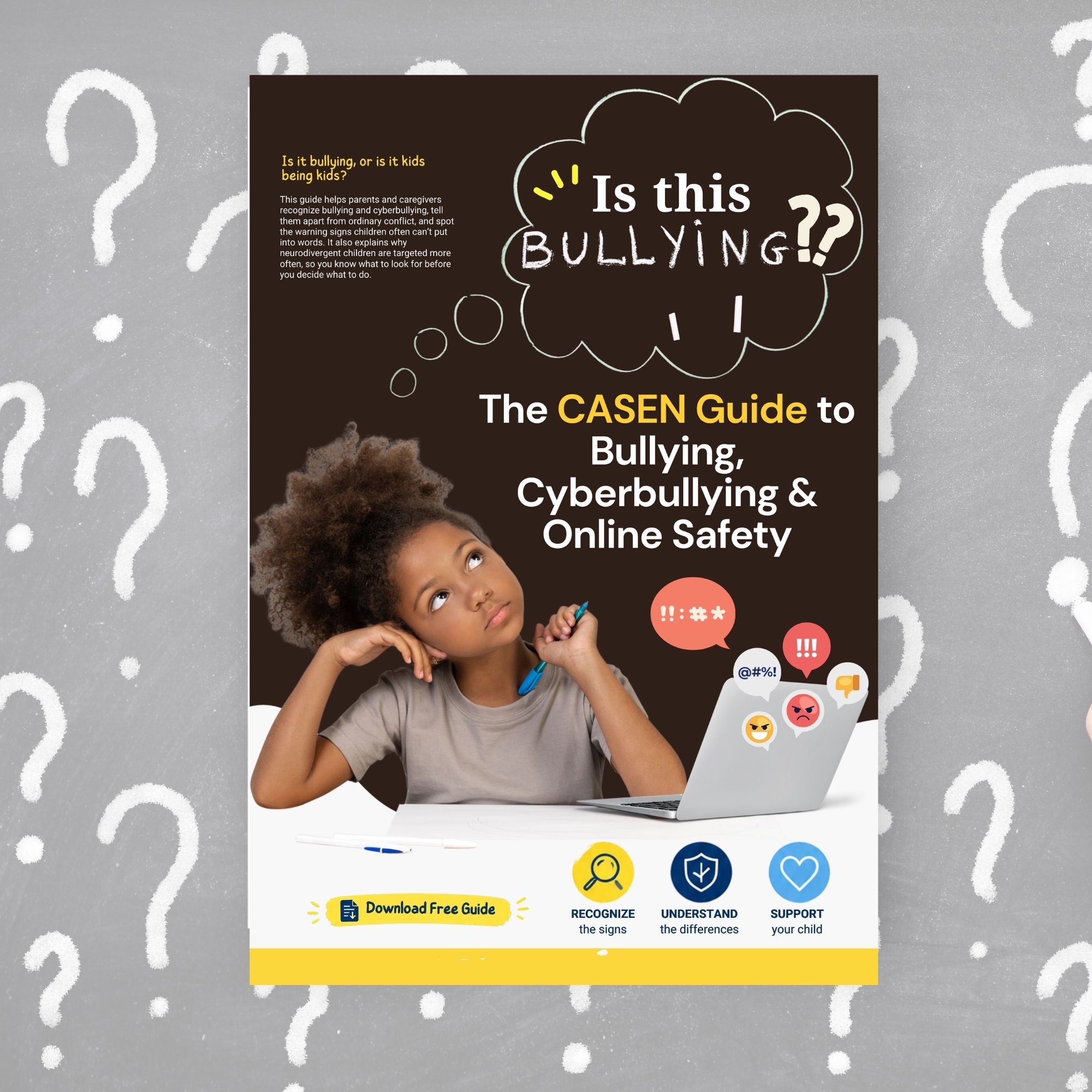
Is This Bullying? The CASEN Guide to Bullying, Cyberbullying & Online Safety
Is it bullying, or is it kids being kids? This guide helps parents and caregivers recognize bullying and cyberbullying, tell them apart from ordinary conflict, and spot the warning signs children often can’t put into words. It also explains why neurodivergent children are targeted more often, so you know what to look for before you decide what to do.
Respond
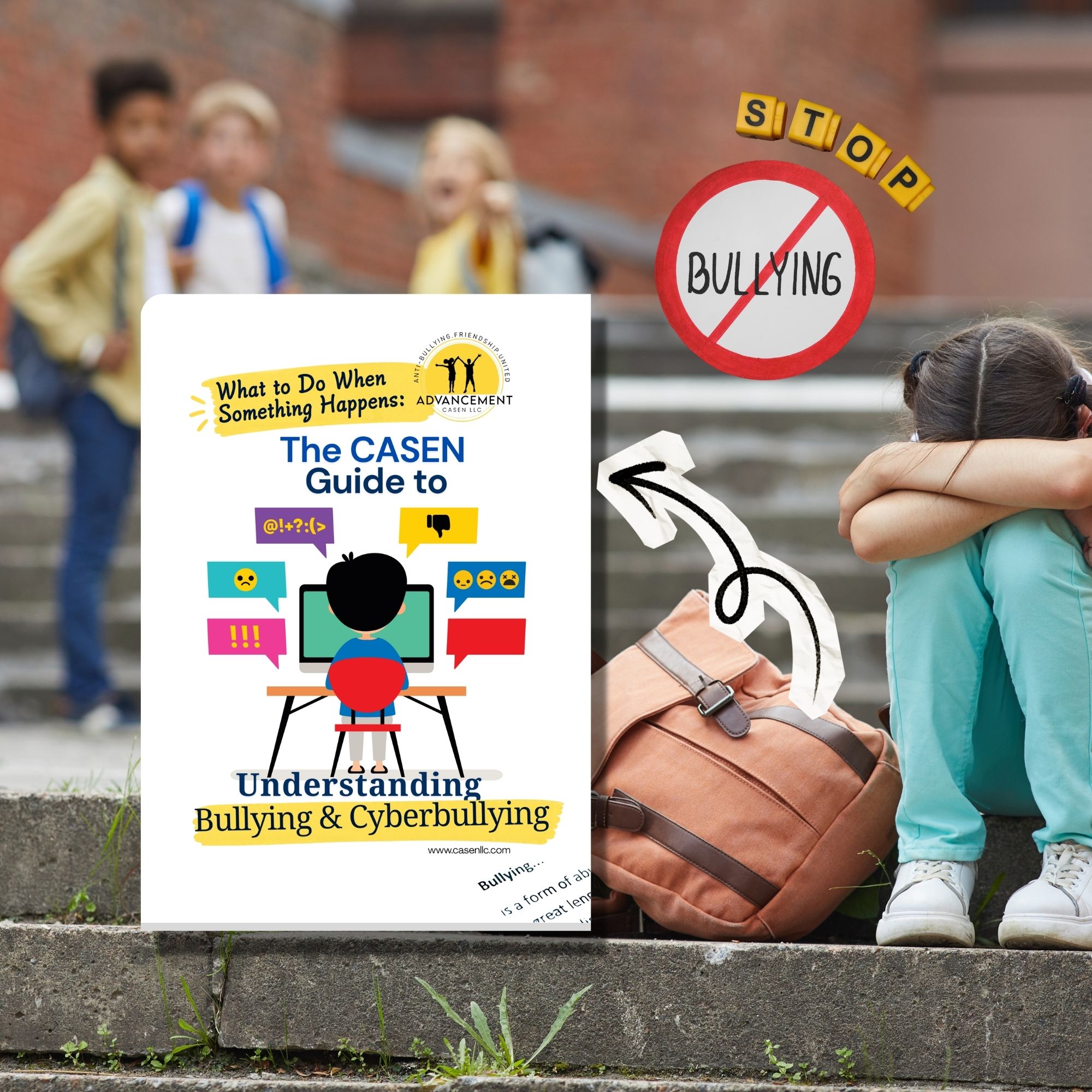
What to Do When Something Happens: The CASEN Guide to Understanding Bullying & Cyberbullying
What to Do When Something Happens: The CASEN Guide to Understanding Bullying & Cyberbullying gives parents of neurodivergent children a calm, step-by-step plan for the moment a child says “something happened.” Using the CASEN Compass™, it walks you through listening first, checking safety, saving evidence, reporting, and working with the school, and it shows who to contact when a situation is more serious than bullying. It also includes tools to prepare your family ahead of time, such as a Safety Circle, a digital safety checklist, and a family online safety agreement.
Understand the System

The Parent Decoder: A Plain-English Companion to HELP!
The Parent Decoder translates 78 terms that schools, specialists, and apps use about your child into plain English. Each entry explains what the word means, why it matters to your family, and what to ask or do when you hear it. The terms are grouped by situation, from the first evaluation to your child’s first group chat, and the guide includes a printable acronym cheat sheet for IEP meetings.
Trusted Resources
| Resource | What it offers |
|---|---|
| Federal Bureau of Investigation (FBI) | Online safety guidance for children, parents, caregivers, and educators. |
| Federal Trade Commission (FTC) | Guidance on children’s privacy, parental controls, scams, gaming, and devices. |
| National Center for Missing & Exploited Children (NCMEC) | Resources on online exploitation and child safety. Report exploitation or image threats through the CyberTipline or at 1-800-843-5678. |
| StopBullying.gov | Federal information on bullying and cyberbullying. |
| Take It Down (NCMEC) | Free, anonymous help removing nude or sexual images of a minor, real or AI-made, from participating platforms. |
| Understood.org | A resource for people with learning and thinking differences. It provides information about challenges, barriers, and opportunities to help them reach their goals. |